
Construction, renovation, demolition, and remediation activities can disturb hazardous substances such as asbestos, lead, respirable crystalline silica (RCS), and mould, creating potential exposure risks for workers and building occupants. These risks cannot be reliably evaluated without proper assessment, air monitoring, and documentation.
Indoor Air Quality &
Air Clearance Sampling
AREC provides WorkSafeBC-aligned exposure monitoring and indoor air quality (IAQ) services, including asbestos air clearance sampling, occupational air monitoring for lead and silica, and mould investigations and assessments. Our work supports regulatory requirements for risk assessment, Exposure Control Plans (ECPs), and verification that controls are effective and exposures are kept as low as reasonably achievable.
Through task-specific air monitoring, moisture and mould investigations, and accredited laboratory analysis, we deliver objective, defensible data to support compliance with WorkSafeBC OHS Regulations and IAQ guidance. Our clear reporting helps employers, owners, and contractors demonstrate due diligence, protect workers and occupants, and safely manage projects from planning through re-occupancy.
Air Clearance Sampling (Asbestos)
Air clearance sampling is conducted after asbestos-related work to confirm that airborne fibre levels are acceptable and that an area is safe for unprotected occupants to re-enter. It applies to spaces where asbestos-containing materials (ACMs) or materials of unknown content were disturbed, particularly when work history is uncertain or proper documentation is lacking.
WorkSafeBC accepts NIOSH Method 7400 (PCM) for asbestos air analysis, with TEM used when fibre identification or greater sensitivity is required.
Clearance sampling is most often required when asbestos removal or disturbance has already taken place—especially when completed by homeowners or non-certified individuals, or when insurers, property managers, or municipal inspectors require objective confirmation of safety. If asbestos work was performed without a hazardous materials survey, Notice of Project, or proper records, aggravated (aggressive) sampling is typically required. This process intentionally disturbs settled dust using airflow to help detect any remaining asbestos fibres.
Air clearance sampling is not a substitute for a pre-work hazardous materials survey. If work has not yet started, WorkSafeBC section 20.112 requires a survey to identify and manage asbestos risks before disturbance.
No one should enter an asbestos work area without either a valid pre-work hazardous materials survey or acceptable air clearance results confirming the space is safe.
Mould Assessments
Mould spores are naturally present in the environment, but when excess moisture combines with building materials such as drywall, wood, insulation, or dust, mould can grow and spread rapidly. Microbiological contamination is a concern for building owners and occupants because mould exposure can contribute to respiratory irritation, allergy-like symptoms, and more serious health effects in susceptible individuals.
While WorkSafeBC has not established numeric exposure limits for mould, it provides clear guidance for investigating and managing mould under its Indoor Air Quality (IAQ) requirements, including Guideline G4.79.
Our mould assessments are designed to identify the source of moisture, define the extent of contamination, and provide a clear, documented path forward. Assessments are recommended whenever mould or ongoing moisture is suspected, or when renovations or demolition may disturb affected materials.
We take a holistic approach, combining visual inspection with targeted measurements to fully understand building conditions. Visual assessment helps identify moisture pathways, affected materials, and contributing factors, while testing and measurements provide objective data to confirm findings and identify issues that may not be visible.
Mould assessments may include:
- Moisture and mould investigation to identify visible and hidden growth and locate water sources
- Evaluation of scope and risk to determine what requires removal versus cleaning
- Control recommendations aligned with WorkSafeBC IAQ guidance, including containment, ventilation, work practices, and PPE
- Clear written reporting suitable for contractors, insurers, and stakeholders
- Project support during removal to help prevent cross-contamination
- Where appropriate, air sampling and/or surface swab sampling to assess mould presence and amplification
Testing tools may include air sampling (with outdoor comparison samples), surface swabs, moisture meter readings, and thermal imaging to help locate concealed moisture. These tools are used together to confirm conditions, focus remediation where it’s truly needed, and reduce unnecessary disruption.
Inspections follow a whole-building approach, covering occupied spaces and common problem areas such as attics, crawlspaces, basements, bathrooms, kitchens, utility spaces, and the building envelope. The goal is to provide an accurate, complete understanding of moisture and mould conditions so remediation can be effective and recurrence can be prevented.
Lead Monitoring
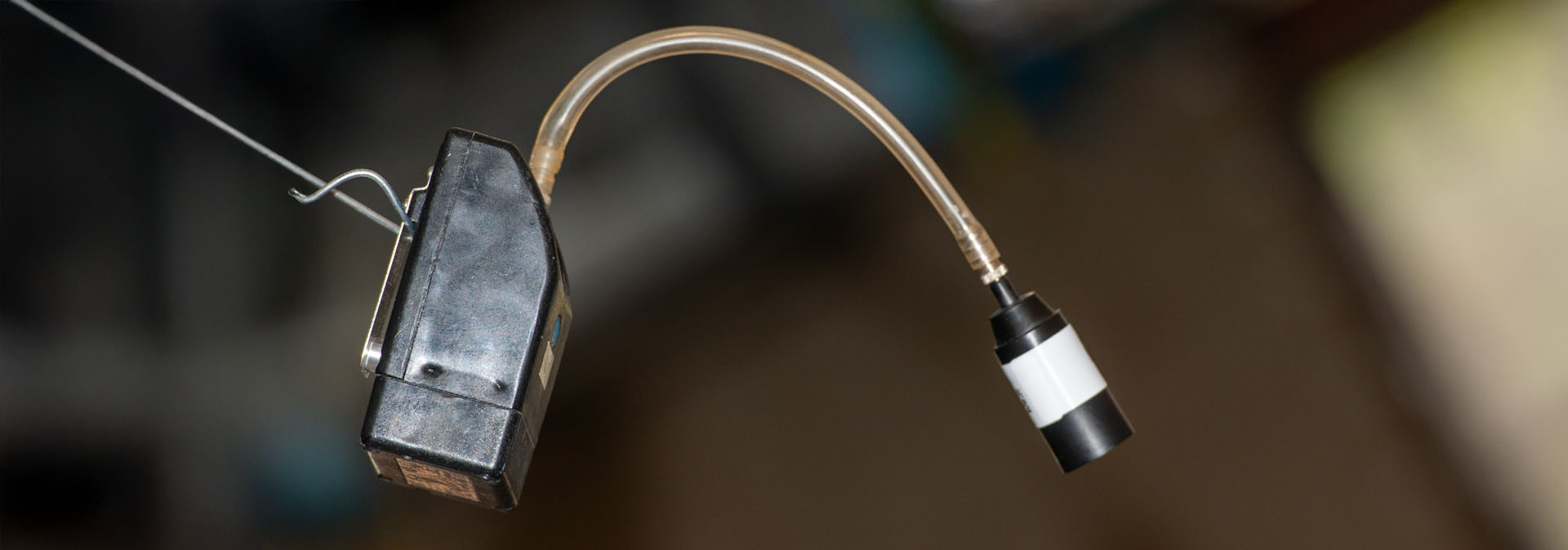
Monitoring most often involves occupational (personal) air sampling, where air is collected from a worker’s breathing zone while tasks are underway. Samples are analyzed by an accredited laboratory and compared to WorkSafeBC exposure limits to confirm risk levels, evaluate the effectiveness of controls, and determine whether additional measures—such as engineering controls, procedural changes, or PPE—are required.
WorkSafeBC requires employers to complete a lead risk assessment, implement an exposure control plan (ECP) when applicable, and conduct air monitoring unless a valid objective-data exception applies. Air monitoring provides objective, defensible evidence that exposures are being properly controlled.
Where needed, area air monitoring and surface wipe sampling may also be used to assess the spread of lead dust, evaluate containment and housekeeping effectiveness, and confirm whether adjacent or re-occupancy areas are suitable for normal use.
Together, these monitoring approaches support regulatory compliance and ensure workers are protected at an appropriate and defensible level.
Silica Monitoring
Silica monitoring assesses worker exposure to respirable crystalline silica (RCS) generated during tasks that cut, grind, drill, or disturb silica-containing materials such as concrete, masonry, stone, tile, drywall compounds, or soil. At AREC, monitoring is most often conducted during renovation, demolition, concrete work, surface preparation, and other dust-generating construction activities.
Monitoring typically involves occupational (personal) air sampling, where air is collected from a worker’s breathing zone while tasks are underway. Samples are analyzed by an accredited laboratory and compared to WorkSafeBC exposure limits to determine exposure risk, evaluate the effectiveness of controls, and identify whether additional measures—such as engineering controls, revised work practices, or respirators—are required.
WorkSafeBC requires employers to assess silica exposure risks and use air monitoring unless reliable objective data shows exposures are adequately controlled for the same tasks and conditions. If results indicate exposure at or above 50% of the applicable exposure limit, an Exposure Control Plan (ECP) meeting section 5.54 is required, and monitoring is used to verify its effectiveness.
Silica monitoring is commonly recommended or required when work generates visible dust, involves grinding, cutting, drilling, jack-hammering, sanding, demolition, or dry sweeping, when respirators are used or may be required, or when ventilation and containment effectiveness is uncertain.
Where appropriate, area (static) air monitoring may also be used to confirm that silica dust is not migrating beyond the work zone and that site controls are functioning as intended.
Silica exposure can cause serious long-term lung disease, and risk is not always obvious without measurement. Monitoring provides objective, task-specific data to ensure controls are appropriate, defensible, and compliant—helping protect workers and keep projects on track.

